What Happens When You Don’t Brush Your Teeth for a Week
Why Do I Need to Brush My Teeth
Proper brushing and overall oral hygiene help you enjoy life by allowing you to chew, taste, swallow, speak, and smile. According to the Canadian Dental Association CDA, while skipping one session is fine, a week of neglect allows plaque to build up. This bacteria produces acids that weaken the enamel, creating an environment that causes the gums to become inflamed, leading to gingivitis.
If left untreated, plaque eventually hardens into tartar and can rapidly progress to irreversible, more severe gum disease periodontitis, noticeable bad breath halitosis, and tooth decay. This results in tangible damage that can only be repaired with professional intervention.

What Happens If You Stop Brushing for a Week
The 7 Day Timeline to Tooth Decay
According to the ADA, here is the chronological breakdown of what happens to your mouth when oral hygiene is ignored
The Fuzzy or Slimy Feeling – Day 1
Within hours, your teeth will feel fuzzy or coated with a thick, slimy film, especially along the gum line. This is the physical sensation of a mature biofilm. This film is a thick colony of living bacteria attaching to your tooth surfaces. If this plaque is not disrupted by brushing, it serves as the foundation for all the damage to follow.
Plaque Hardens into Tartar – Days 2 to 3
Within 48 hours to a week, that soft biofilm begins to mineralize into tartar calculus. Tartar is a rock hard deposit that bonds to your enamel. Unlike plaque, tartar cannot be removed with a toothbrush and requires professional dental cleaning to be safely scaled or removed.

The Onset of Gingivitis – Days 3 to 5
As tartar accumulates, it irritates the gums, causing them to become inflamed and bleedy. This triggers gingivitis. At this stage, your gingival tissue becomes red, swollen, and tender. While still reversible, this inflammation is the body’s first warning sign of infection
Noticeable Bad Breath Halitosis – Days 5 to 7
By the end of a week, the accumulation of decaying food particles and bacteria creates a distinct, foul odor known as halitosis. Bacteria colonizing the tongue and gum pockets release sulfur compounds. Unlike temporary morning breath, this odor is chronic and cannot be masked by mints or gum alone.
Enamel Breakdown and Tooth Decay – Day 7 and Beyond
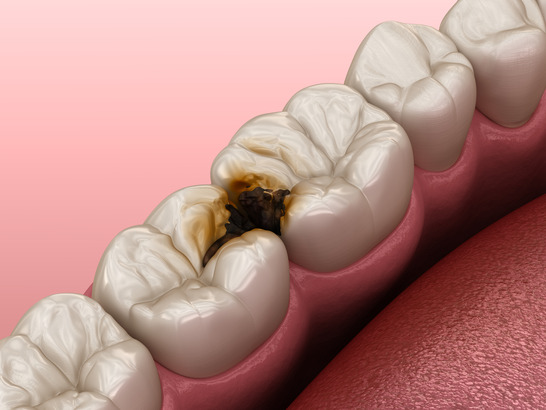
As bacteria consume sugars, they produce acids that attack your teeth through demineralization. This breaks down the protective enamel layer, leading to sensitivity.
When the enamel collapses, cavities form which may require fillings. Once decay reaches the softer dentin underneath, the damage accelerates rapidly and often becomes painful. Once decay reaches the tooth’s pulp or the bone is compromised, only professional intervention such as root canals, restorative treatment, or surgery can save the tooth.
Summary: Happens If You Stop Brushing for a Week
| Day | What’s Happening in Your Mouth | What You May Notice | Is It Reversible |
|---|---|---|---|
| Day 1 | Plaque biofilm forms along the gumline | Fuzzy or slimy feeling | Yes |
| Days 2 to 3 | Plaque begins mineralizing into tartar | Rough areas near gums | Partially, professional cleaning may be needed |
| Days 3 to 5 | Gum inflammation begins gingivitis | Red, swollen, bleeding gums | Yes if treated early |
| Days 5 to 7 | Bacteria produce sulfur compounds | Noticeable bad breath | Yes with proper hygiene |
| Day 7 and beyond | Enamel demineralization begins | Sensitivity, early decay | Early stages reversible, advanced decay is not |
How Can I Recover After Not Brushing
Step 1 Do a Proper Reset Brush and Floss Tonight
How to brush correctly
Lets brush throughly – Here is brushing 101
Use a soft bristle toothbrush manual or electric.
Hold it at a 45 degree angle toward the gumline.
Use small circular motions along the gums.
Brush for 2 full minutes.
Brush your tongue gently.
Spit and do not rinse heavily so the fluoride can remain on the teeth.
Floss thoroughly. A bit of bleeding in the gums is normal.
Electric vs Manual Toothbrush
An electric toothbrush is highly recommended for recovery. Oscillating rotating heads remove up to 21 percent more plaque than manual brushing.
If using a manual toothbrush, choose one with a multi level bristle pattern or angled bristles to help reach deeper into the gum line.
Step 2 Add a Short Term Mouth Rinse Optional
For 5 to 7 days only
Use an alcohol free antibacterial rinse
Or
Use warm salt water half a teaspoon of salt in warm water
This reduces inflammation while your brushing routine catches up.
Step 3 Support the Healing
For the next week
Reduce sugar and snacking.
Drink plenty of water.
Avoid very acidic drinks.
Chew sugar free gum if brushing is not possible midday.
Your saliva helps repair early enamel changes.
Dentist tip:
Your smile does not deteriorate overnight, but damage can begin in just one week. The good news is that early changes are reversible when addressed quickly.
General management principles
| Symptom | What It Could Mean |
|---|---|
| Heavy yellow buildup | Tartar accumulation |
| Bleeding beyond 5 to 7 days | Active gingivitis |
| Persistent bad breath | Bacterial overgrowth |
| Tooth sensitivity | Enamel weakening |
When to Book a Professional Cleaning
If you notice
- Heavy yellow buildup
- Persistent bleeding after 5 to 7 days
- Bad breath that does not improve
You may have tartar that needs professional removal. As someone who runs a practice, you know this stage is where a simple hygiene visit prevents scaling and root planing later.
How Long Until You Are Back to Normal
If you follow the reset plan
- Breath improves in 24 to 48 hours
- Gum bleeding improves in 3 to 5 days
- Inflammation reverses in about 7 to 10 days
One week of neglect does not cause permanent damage in most healthy adults.
Bottom Line
A week of neglect allows plaque to produce enamel weakening acids. This triggers gum inflammation, chronic halitosis bad breath, and irreversible tooth decay. Once plaque has hardened into tartar, only professional intervention can repair the damage. Do not let a temporary lapse become permanent damage. Protect your smile by scheduling a professional dental cleaning appointment or consulting with our dental team in Etobicoke today.
References:
https://www.health.harvard.edu/staying-healthy/rinse-brush-floss-scrape-and-repeat https://www.ada.org/resources/ada-library/oral-health-topics/toothbrushes https://www.cda-adc.ca/en/oral_health/cfyt/dental_care_seniors/flossing_brushing.asp https://www.cda-adc.ca/en/oral_health/seal/ https://www.fdiworlddental.org/sites/default/files/2020-11/2016-fdi_cpp-white_paper.pdf